Visit outdoorexperts.ca Today
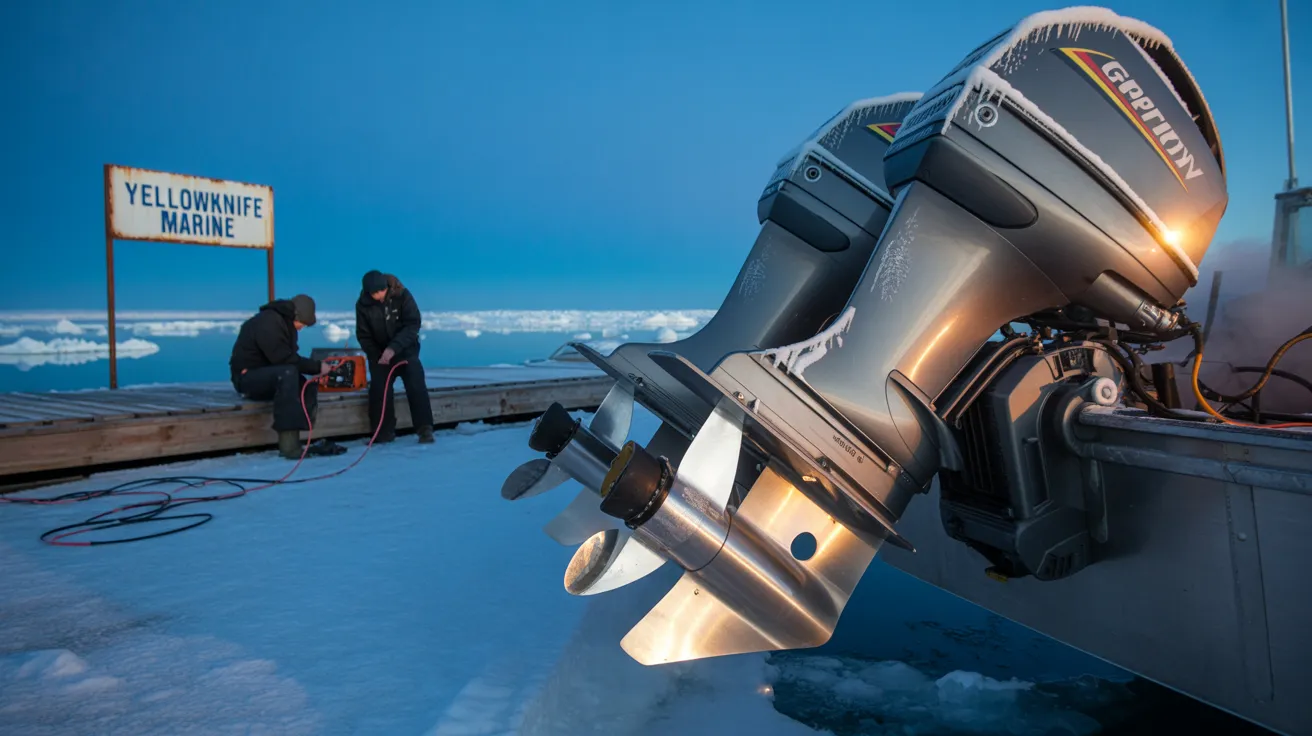
If you're running hard water in the vicinity of Yellowknife, you need to prepare outboards like expedition gear: preheated block heaters, properly warmed and tested AGM batteries, thick-gauge wiring, and relays with voltage sensing. You should size horsepower to hull and payload, choose props for maximum RPM under load, and implement cupped stainless wheels with ice-protected water intakes. Remember to log fuel trims, swap impellers on schedule, and armor skegs. Always carry PLB, backup equipment, and purified fuel. Keep at it and you'll learn about reliable improvements that perform in practice.
Critical Findings
- Specialists in cold-weather outboard preparation for Yellowknife: including engine warming units, winter-grade power cells, sealed connectors, and thermostatic preheat systems.
- Professional motor configuration and propeller optimization for heavy loads, guaranteeing reliable planing and fuel-efficient range in subzero conditions.
- Ice protection features: reinforced skegs, protected low-water intakes, stainless steel cupped propellers, and impact-resistant clutch dogs for ice-related collisions.
- Full-scale maintenance diagnostics featuring compression tests, impeller maintenance, anode care, clean fuel processing, and electrical system analysis.
- Safety comes first in our operations with key safety protocols such as fuel planning maintaining 30-50% reserve capacity, thorough journey planning, backup navigation using GPS and paper charts, and well-equipped emergency gear for distant operations.
Rugged Machines, Northern Waters
While navigating Great Slave Lake, weather shifts quickly, so you select hardware that withstands harsh weather, rough waters, and extended journeys. You choose outboards with sealed harnesses, low-temperature control systems, and alternators that hold voltage at subzero idle. Arctic performance starts with stiffer engine mounts, responsive steering control, and props optimized for challenging conditions. You'll choose stainless wheels with cupping to keep bite in cross-waves. For frozen conditions, you run protected runners and reinforced lower units with guarded water inlets.
Use block heaters for preheating, maintain synthetic 0W oil circulation, and ensure dry fuel with heated separator systems. Set elevated idle for sleety weather, then optimize neutral settings for smooth, fast planing. Stock extra impellers, backup shear pins, and de-icer spray for emergencies.
Meet the Yellowknife Techs Behind the Wrenches
Walk through the service bay doors and you'll encounter techs who employ Great Slave Lake like a test bench. You'll observe laptops talk to ECUs while multimeters track voltage drops across corroded harnesses. They'll examine injector pulses, log fuel-trim data, and verify repairs with back-to-back lake runs. Their diagnostic methods focus on root-cause isolation: compression, leak-down, spark quality, then fuel delivery, in that order.
You get support from teams developed via thorough mentorship programs. New technicians work alongside masters, equipped with precision tools, developing expertise through practical experience. They'll blueprint gearcases, shim propshafts, and position motors for smooth operation. When cavitation scars show, they evaluate, restore, and tune. If readings fluctuate, they measure precisely, never estimate. You can rest assured all hardware, joints, and programming achieves perfect specification.
Master Guide to Winter Start-Up
When temperatures plummet below -30°C, cold starts become a methodical procedure rather than chance. It's essential to preheat all possible components and organize your equipment for quick work. First verify proper battery management: keep an AGM or lithium battery with suitable cold-weather ratings at optimal temperature, fully charged, and load-tested. Use heavy-duty cables to limit voltage loss. Prepare the fuel rail by turning the key multiple times; listen for the fuel pump reaching stable operation.
Configure choke adjustments according to engine type. On carbureted models, use full choke, perform two primer pulls or a short crank, then reduce to half choke once it fires. With EFI models, no manual choke needed - implement fast-idle procedure as detailed in the manual. Carefully control throttle input to prevent flooding.
Apply 0W synthetics in both crankcase and gearcase compartments. Confirm fuel volatility and water separation. Let the motor settle at a quick idle prior to shifting into gear.
Selecting the Perfect Outboard for Remote Runs
Start by matching the horsepower to your boat's requirements, load requirements, and water velocity for optimal propeller performance without overworking the motor. Following that, assess fuel consumption during normal operation and backup fuel needs while trolling to determine your viable travel distance with added capacity for headwinds and route changes. Select an engine that satisfies these operational needs, instead of choosing the highest-rated option.
Horsepower-To-Load Match
Match power output to the complete load you carry-comprising hull, crew, fuel, freight, and contingency-so the engine planes efficiently and maintains cruise velocity without strain. Reference manufacturer power-to-weight recommendations, then include extra capacity for rough water and wind. When deciding between sizes, opt for the bigger class; low power risks bouncing and extended hole-shot times. Verify wide-open throttle rpm with full capacity; modify with proper propeller selection before doubting the engine. Reduce pitch to restore rpm, enhance blade area for grip, and maintain diameter within gearcase limits. Apply load balancing to maintain the longitudinal center near designed trim; shift weighty items forward to decrease bow rise. Track speed vs. rpm and fuel usage to ensure the engine runs in its efficiency spot at your typical cruise velocity.
Fuel Range Planning
When planning remote expeditions, managing fuel consumption is essential, and selecting the right outboard engine is crucial. Begin your calculations with actual cruising speed data, not maximum throttle statistics. Track and record fuel consumption in liters per hour, vessel speed, tidal effects, and vessel burden; calculate distance per unit fuel, then confirm with practical testing. Modern four-strokes optimize fuel consumption at moderate throttle, while DI two-strokes provide impressive thrust but require proper propping to maintain efficiency. Select propeller specifications to achieve manufacturer-recommended rpm when fully loaded.
Establish fuel backup plans: preserve a 30% minimum fuel reserve beyond the projected round-trip requirements, along with extra reserves for weather and current conditions. Split fuel capacity among clean, secured tanks; install a selector valve to isolate contaminated fuel. Install a consumption meter and precise hourly journey records. Map bailout beaches and cache points. When efficiency becomes critical, lower cruising speed or increase displacement.
Essential Maintenance Routines for Long-Term Success
Maintain your rig's peak performance by following a routine service schedule: essential maintenance items including plugs, impeller, anodes, thermostat, gear oil and torque testing. Handle fuel and oil maintenance with properly treated fuel, water filtration, proper TC-W3 blend or specified 4-stroke oil, and consistent maintenance schedules. Fight corrosion using protective compounds, corrosion-resistant fastener treatment, freshwater flushes, protective coating, and sacrificial anodes monitored and replaced as needed.
Service Schedule by Season
When the seasons transition on Great Slave Lake, a systematic service checklist keeps your outboard reliable, effective, and prepared for use. Commence with a pre-season inspection: verify throttle and shift cable travel, check steering movement, tighten engine-mount and transom bolts, test kill switch and lanyard, check battery cranking amps under load, and inspect harness connectors for corrosion. Examine prop blades for wear, hub spline wear, and shaft runout. Check belt wear and tension. Flush cooling passages, confirm telltale strength, and swap anodes if pitted.
Perform a seasonal checklist: inspect electrical connections, check compression across cylinders, replace impeller according to schedule, remove debris from screens, and check thermostat performance. Apply grease to zerks, oil linkages, and examine cowling seals and intake screens.
Oil and Fuel Maintenance
Treat fuel and oil care like any other critical system: treat ethanol fuel blends for storage, cycle fresh Top Tier fuel regularly, and clean out stale gas from storage tanks and fuel lines before it can harm fuel injectors. Apply a high-grade fuel stabilizer when filling up if the boat might sit idle. Install the inline filter as recommended; examine primer bulbs and clamps for leaks. Verify rail pressure and injector balance if the idle becomes unstable.
Match appropriate oil weight for ambient temperatures and manufacturer specifications; extremely cold starts in subarctic conditions can damage the wrong viscosity. Schedule oil and filter maintenance according to usage hours, rather than estimates-get routine oil testing to check component wear and fuel intrusion. Keep breather systems clear of buildup. Watch oil consumption patterns; rapid consumption usually suggests seal failures or ring wear. Log fuel supply, runtime hours, oil brands, and maintenance timing.
Preventing Metal Deterioration
Despite aluminum and stainless being the main focus, it's all about chemistry: prevent oxidation, salt exposure, and galvanic action from destroying the setup. Be sure to wash every section from powerhead to lower unit using fresh water following every run; flush salt from cooling indicator and trim mechanisms. Dry completely, then apply outside fittings with an anti-corrosion spray, being careful to miss the belts. Pull back the cowling, check all ground connections, and apply dielectric grease on connectors-with a thin, thorough layer. Confirm all bonding straps are secure.
Inspect sacrificial anodes on a monthly basis and install new ones when 50% gone. Select the proper alloy for your marine environment: zinc in salt water, aluminum in brackish conditions, magnesium for fresh water. Never apply paint to anodes or isolate them with sealants. Utilize anti-seize when tightening stainless fittings to stop binding. Use epoxy primer on small damages. Keep tilted downward for water removal, disconnect the battery's negative terminal, and disconnect from shore power.
Premium Upgrades and Accessories for Northern Conditions
As northern conditions can damage insufficient equipment, you'll need to implement upgrades that strengthen your outboard and enhance winter ops. Start with cold-climate fuel management: optimize jets for thick air, add primer bulbs with cold-resistant elastomers, and install a choke linkage that remains ice-free. Shield electrical components with insulated battery compartments, nautical-grade tinned wire, and weatherproof breakers; install a voltage-sensing relay for split charging capabilities.
Fortify the lower unit with a durable protective skeg guard, intake filtration, and enhanced clutch mechanism. Install a high-output charging system and LED diagnostic tools to identify failing coils before breakdown. Choose a temperature-regulated block heater and quick-drain kits for winter-safe maintenance. Switch to high-performance bushings, silicone boots, and cold-rated grease. Complete the setup with replaceable intake plugs and a strong transom saver for ice-impacted operations.
Stories From Fishing Guides and Industry Professionals
You might install each northern enhancement, but the evidence emerges on the lake. You hear it in the engine sounds in the early morning and experience it through the steering when the blade cuts through. Guides say you judge a motor by how it maintains speed with maximum capacity and how readily it springs back to life after getting thoroughly chilled.
Knowledgeable fishermen focus on mechanical specs, not appearance. You can expect better engine performance if you properly warm up, stick to pure gasoline, and ensure proper pitch selection. Professional outfitters modify fuel mixture for seasonal conditions and install protected electrical components that resist cold damage. In group sessions, members exchange key metrics: optimal engine speed, efficiency rates, and anti-cavitation solutions. Evidence confirms that reliable setups with consistent firing, tight control, and optimal rigging improve success rates.
Important Safety, Fuel, and Navigation Information for Big Country
Upon encountering marshy terrain and bedrock, use a detailed checklist not relying on gut feel. Verify the weather forecast, water conditions, and light conditions. Plot bearings on paper and GPS, cross-referencing with aerial views for route planning. Document fuel cache locations and emergency exit points. Note down departure time, team headcount, and estimated arrival time.
Determine fuel requirements at cruising RPM, plus factor in a 30 to 50 percent reserve for headwinds and alternative routes. Utilize sanitized fuel jugs with moisture-removing funnels; identify fuel grade and filling date. Thoroughly inspect fuel system components and venting. Maintain a supply of spare spark plugs, propeller, shear pins, and tools.
Navigate at planing trim, keep the prop engaged; avoid hazardous areas by observing seam lines and water color changes. For emergency communication, keep a PLB on your PFD, VHF radio, distress flares, signal mirror, and emergency whistle. Make sure to submit a float plan and set up routine checks.
FAQ
Can I Get Emergency Boat Repairs Near Yellowknife?
Indeed. We provide urgent watercraft repair assistance around Yellowknife. We dispatch rapid retrieval teams with complete repair toolsets, backup components, and satellite connectivity. We conduct watercraft troubleshooting at your position, identify mechanical and electrical issues, and carry out on-site fixes or secure towing. You receive arrival estimates, GPS tracking, and completion verification checks. We support all outboard engine types, electronic fuel injection, and operational controls. Provide us coordinates, engine model, symptoms, and safety status.
Available Financing and Payment Plans for New Outboards
We offer Payment Plans with set annual percentage rates, flexible terms of 12-72 months, and Payment Deferrals for 60-90 days, based on eligibility. This structured approach helps maintain your financial direction. Simply complete a credit check, document income, and choose coverage add-ons: equipment protection, anti-corrosion warranty, propeller insurance. We accept credit cards, bank transfers, and verified checks. You can pay off early without charges; rates vary by tier.
Is There a Way to Try Outboards Before Buying?
It's possible to book test rides with test models before buying. You will have to schedule a time slot and show ID and insurance documentation. You'll complete a preliminary check including propeller pitch, installation height, control connections, and fuel system preparation. During the water test, you'll measure speed and RPM readings, time to plane, trim performance, cavitation limits, and vibration levels at cruise. Following the trial, we'll check here examine engine diagnostics, fuel usage per hour, and charging performance to ensure proper matching of the outboard to your boat.
What Service Wait Times Can You Expect During Peak Season?
Allow 2-4 weeks for service during peak times. This backlog is mainly caused by parts availability and service capacity. Standard maintenance usually requires 7-10 working days, but tasks including diagnostics, carburetor rebuilds, or lower-unit seal replacements typically require 3-4 weeks. To reduce waiting times, plan ahead for maintenance, pre-authorize necessary components, and bring your model and serial numbers. Though urgent fixes can be accommodated, rush fees and priority queuing will apply. Maintain spare parts onboard to minimize operational interruptions.
Are Training and Certification Programs Available for New Boat Owners?
Indeed - we offer introductory courses and safety training tailored for new boat owners. You'll learn about core systems: fuel, cooling, electrical, and trim, with direct experience in rigging, pre-launch checks, and emergency procedures. We'll teach docking techniques, power control, and prop choices. You'll understand navigation fundamentals, electronic navigation, VHF communications, and cold-water safety gear. Available certifications include boating licenses and safety certifications. You'll graduate fully equipped, protocol-driven, and ready to operate your vessel safely.
Final Thoughts
You've witnessed how Yellowknife's experts tackle brutal cold, how the perfect blend of prop, pitch, and ECU settings converts subzero starts into routine operations. Now it's time for you to rig smart, conduct thorough testing, and run efficiently. Choose displacement for payload, drive configurations for current, and upkeep timing for distance. In the North, the river acts as a forge: it tempers both gear and operator alike. Pack redundancy, plan fuel, track weather, and you'll develop your own trustworthy, repeatable, ready-to-go setup.